

Published on: January 17, 2026
Dehradun, India – January 17, 2026: India is facing a fast-evolving weight-management challenge that is no longer limited to big cities or high-income households. National data now show a clear rise in overweight and obesity across adults, with implications for household health, productivity, and long-term medical costs.
According to the National Family Health Survey (NFHS-5, 2019–21), about 24% of women and 23% of men aged 15–49 years in India are overweight or obese (defined as BMI ≥ 25.0 kg/m²). This represents an increase from NFHS-4 (2015–16), when the corresponding figures were approximately 21% for women and 19% for men.
Behind these national averages are significant state-by-state differences, but the overall trend is consistent: more Indians are living with excess weight, and many are not receiving structured, stigma-free support.
Karespot Technology Private Limited is expanding access to evidence-based weight management in India through a doctor-led, coaching-supported program for people living with overweight and obesity. As India faces a growing excess-weight burden documented in the National Family Health Survey (NFHS-5), millions are at higher risk of chronic conditions such as type 2 diabetes, cardiovascular disease, and osteoarthritis.
Newer prescription weight-loss medications available to Indian patients through regulated channels have shown the potential to reduce body weight by up to around 20% in clinical trials when paired with clinical monitoring and lifestyle support.
To begin, check your eligibility here:
https://karespot.fillout.com/eligibilitycheck
Problems caused by Being overweight
Excess weight is not a cosmetic issue – it is a medical and public-health risk factor that can compound quietly over time. People living with overweight and obesity often experience fatigue, breathlessness, joint pain, and sleep disruption, alongside social stigma that can delay care. These burdens intensify when weight-related metabolic risks progress into chronic disease.
Excess weight is strongly linked to non-communicable diseases (NCDs), including cardiovascular disease, type 2 diabetes, and osteoarthritis. The World Health Organization notes that overweight and obesity increase the likelihood of major NCDs and premature mortality, particularly when combined with high blood pressure, elevated blood sugar, and abnormal cholesterol.
The downstream impact is expensive – financially and emotionally. Diabetes alone represents a rapidly growing national burden. A large, nationally representative analysis reported that India has approximately 101 million adults living with diabetes and 136 million with prediabetes (ICMR–INDIAB; The Lancet, 2023). Cardiovascular disease remains a leading cause of death in India.
Beyond metabolic disease, arthritis and joint degeneration reduce mobility and make exercise harder, creating a cycle where pain limits movement and limited movement worsens metabolic health. For many adults balancing work, caregiving, and long commutes, this leads to a sense of being “stuck,” even after repeated attempts at dieting or exercise.
What is the solution?
India’s next phase of weight care must resemble modern chronic disease management: clinically guided, personalized, and sustainable. Lifestyle interventions—nutrition, movement, sleep, and stress management – remain foundational but are not always sufficient alone, particularly for individuals with long-standing obesity or repeated weight regain.
In recent years, a new class of prescription weight-loss medications (including GLP-1–based and related therapies, depending on clinician assessment and availability) has expanded what is medically achievable. Large randomized clinical trials have shown average weight-loss outcomes approaching 15% with semaglutide and up to around 20% with tirzepatide at certain doses, alongside improvements in cardiometabolic risk factors.
These treatments are not a quick fix and are not suitable for everyone, but for eligible patients, they can be meaningful when paired with medical oversight and lifestyle support. Importantly, weight loss of this magnitude can reduce key drivers of NCDs – blood sugar, blood pressure, and waist circumference – supporting fewer complications and improved quality of life.
Karespot’s approach: Access in Four Steps with Holistic Care
Karespot Technology Private Limited has developed a care pathway designed to reduce friction, confusion, and delay – while keeping medical safety and human support at the centre.
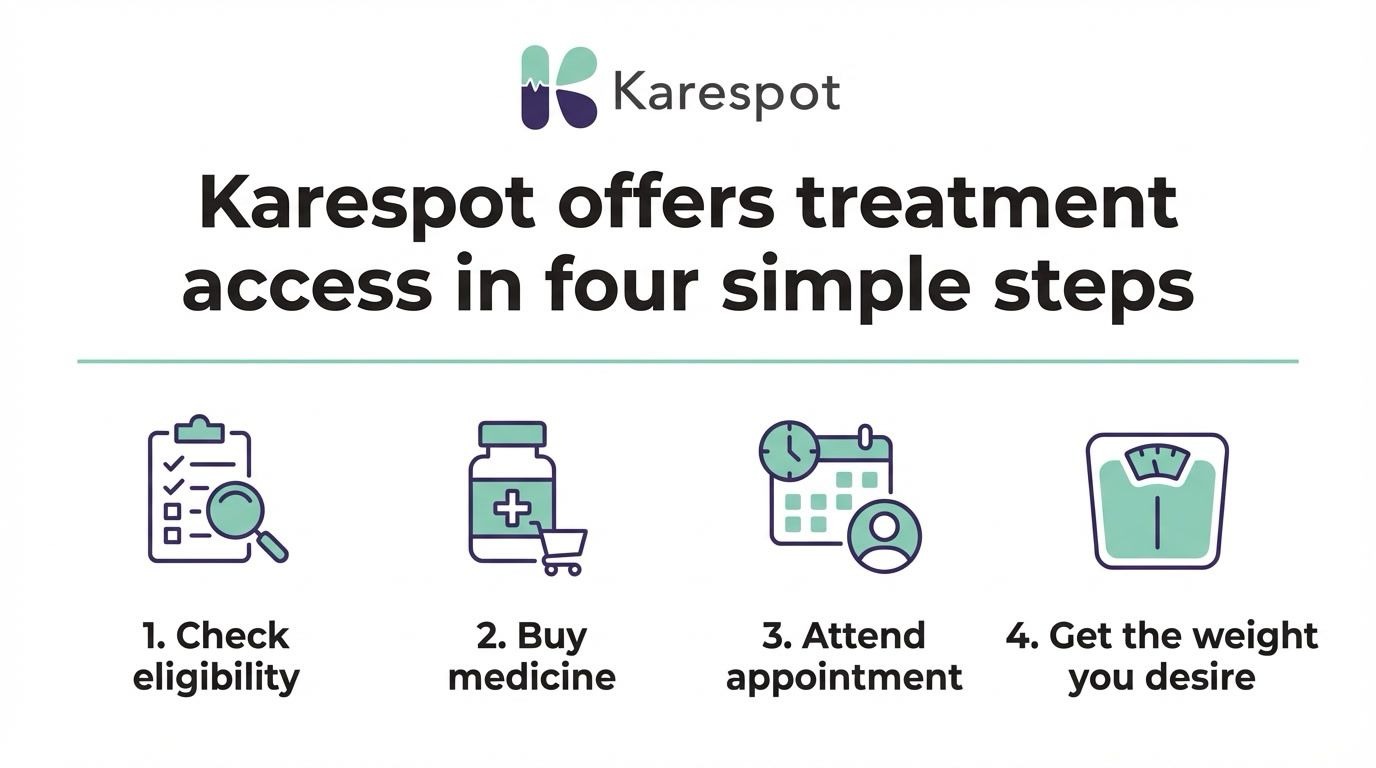
Karespot offers access in four simple steps:
- Check eligibility
- Buy medicine
- Attend appointment
- Get the weight you desire
Patients can begin with a screening to determine potential eligibility for prescription-based support:
https://karespot.fillout.com/eligibilitycheck
More program information is available at:
https://karespot.in/
Under the program, patients receive:
- Doctor guidance, including immediate support for side effects, expectations, and contraindications
- A health coach to personalise nutrition, movement, and sleep routines
- Ongoing education to reduce fear, confusion, and stigma around obesity as a medical condition
This integrated approach matters because medication without support can feel intimidating, while lifestyle advice without clinical structure can feel ineffective.
Building credibility with experienced advisors
Karespot is supported by an advisory group bringing strengths across innovation, brand-building, and strategic execution. Advisors include Dr. Keppie, an innovator with a PhD from the University of Oxford; Ms. Kawasaki, brand advisor; and Mr. Minks, a senior consultant at KPMG . Their combined experience supports program design, patient communication, and operational scale.
Resources
Eligibility check: https://karespot.fillout.com/eligibilitycheck
Instagram updates: https://www.instagram.com/karespot.in
About Karespot Technology Private Limited
Karespot Technology Private Limited is a digital health company focused on improving access to evidence-based weight management in India through a structured, clinician-supported, and coaching-enabled program. Karespot’s model is designed to help eligible patients navigate modern obesity care with clarity, safety, and ongoing lifestyle support.