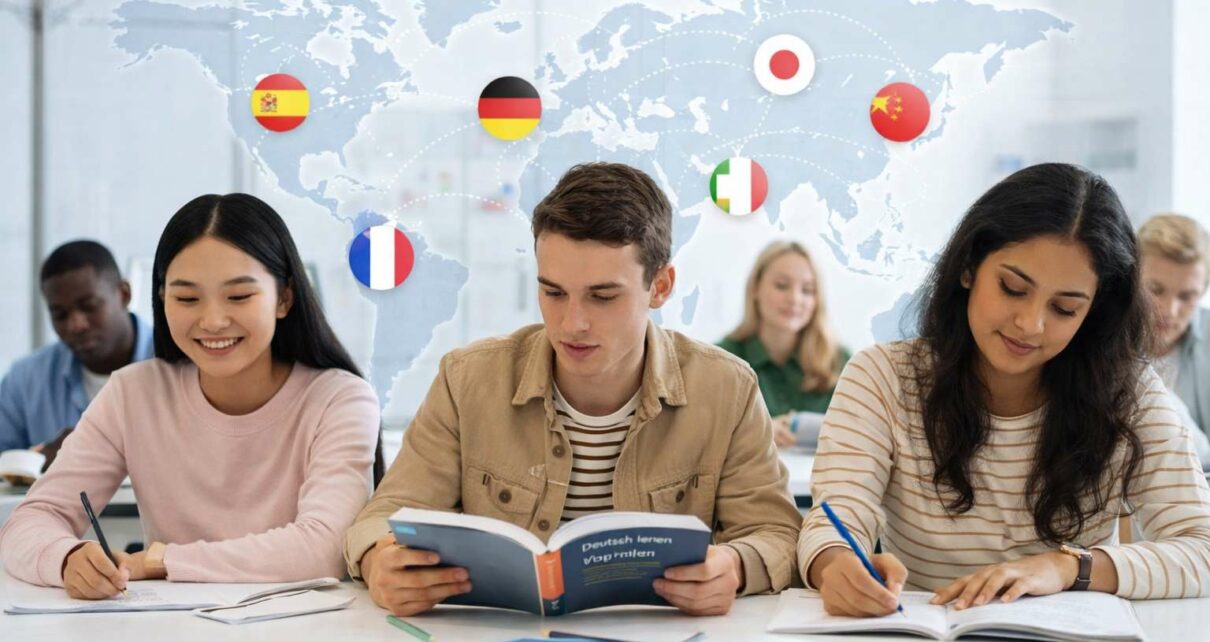
In today’s interconnected world, foreign language proficiency has evolved from a supplementary skill into a strategic necessity. As international education, global employment, and cross-border collaboration become increasingly common, the ability to communicate across languages and cultures is now a defining advantage for students, professionals, and institutions alike.
Globalization has reshaped how people study, work, and do business. Students are exploring academic opportunities in Europe and Asia, professionals are working with international teams, and organizations are expanding beyond domestic markets. In this environment, language skills are no longer optional—they are essential tools for effective communication, cultural understanding, and long-term success.
Changing Expectations in Education and Employment
Educational institutions and employers are redefining what it means to be “career-ready.” Alongside academic knowledge and technical expertise, there is growing emphasis on communication skills, cultural adaptability, and multilingual competence. Many universities now encourage or require foreign language learning as part of their academic framework, particularly for programs connected to international exposure.
Similarly, multinational companies increasingly seek professionals who can interact confidently with global clients, partners, and colleagues. Language proficiency enables smoother collaboration, reduces miscommunication, and builds trust in cross-cultural environments. These factors often translate into better career growth, leadership opportunities, and international mobility.
Language Learning as a Long-Term Investment
Foreign language education offers long-term professional and personal benefits. Students who learn additional languages often gain access to a wider range of academic institutions, scholarships, and exchange programs. European countries, for instance, place strong value on language proficiency as part of academic and professional integration.
For working professionals, language skills function as a career multiplier. They enhance employability, open doors to international roles, and support advancement in globally oriented industries such as technology, engineering, healthcare, hospitality, and international business. Entrepreneurs and business leaders also benefit from language skills when dealing with overseas markets, suppliers, and customers.
Beyond Grammar: Cultural Intelligence
Language learning is not limited to vocabulary and sentence structure. It plays a crucial role in developing cultural intelligence—the ability to understand and respect cultural norms, communication styles, and professional etiquette. Cultural awareness is particularly important in global academic environments and international workplaces, where misunderstandings can easily arise without contextual knowledge.
While digital translation tools are helpful for basic communication, they cannot replace the depth of understanding gained through structured language education. Learning a language provides insights into how people think, negotiate, and collaborate, which is invaluable in professional and academic settings.
Structured and Goal-Oriented Language Training
As demand for language skills grows, learners increasingly seek structured, outcome-oriented training rather than informal or unplanned learning. Modern language education focuses on clear objectives, such as academic readiness, career advancement, or international relocation.
Institutions that offer goal-based programs aligned with international proficiency frameworks ensure that learners progress systematically and gain measurable skills. Many learners today prefer programs that emphasize real-life communication, practical usage, and continuous assessment over purely theoretical instruction.
In this context, professional language institutes play a key role in preparing learners for global opportunities. The Indian Institute of Foreign Languages has emerged as one such institution, offering structured foreign language programs designed to align with international standards and real-world requirements. Its German language training, for example, is structured to support learners across proficiency levels while focusing on practical communication and cultural understanding.
https://iifls.com/german-language-course/
The Rise of Online and Flexible Learning
The growth of digital education has made foreign language learning more accessible than ever before. Online platforms allow learners to access quality instruction regardless of location, while flexible schedules accommodate students and working professionals alike. Blended learning models that combine live sessions, recorded lessons, and interactive practice have become increasingly popular.
This shift has also enabled institutions to collaborate with universities, colleges, and organizations worldwide, offering customized language programs tailored to specific academic or professional needs. Such collaborations help institutions enhance global readiness among students and staff.
Cognitive and Personal Development Benefits
Beyond academic and professional outcomes, learning a foreign language contributes to cognitive development. Research suggests that multilingual individuals often demonstrate improved problem-solving skills, better memory retention, and enhanced adaptability. Language learning also builds confidence, discipline, and resilience—qualities that are valuable in every area of life.
For institutions, offering quality language education strengthens academic reputation, supports international engagement, and improves student outcomes. For individuals, it provides a lifelong skill that continues to create opportunities across different stages of life.
Preparing for a Global Future
As global integration accelerates, foreign language proficiency will remain a critical differentiator. Whether for higher education, career growth, entrepreneurship, or cultural exchange, language skills enable individuals to navigate international environments with confidence and competence.
Institutions that focus on structured, learner-centric language education are playing an important role in shaping globally capable individuals. Platforms such as the Indian Institute of Foreign Languages provide learners with access to professionally designed programs that support long-term academic and professional goals.
https://iifls.com/
Conclusion
Foreign language learning is no longer a luxury—it is a necessity in a globally connected world. Structured language education empowers individuals with communication skills, cultural understanding, and global readiness. As education and employment continue to transcend borders, those who invest in language proficiency today are better positioned to succeed in the global landscape of tomorrow.