Published on: August 22, 2026
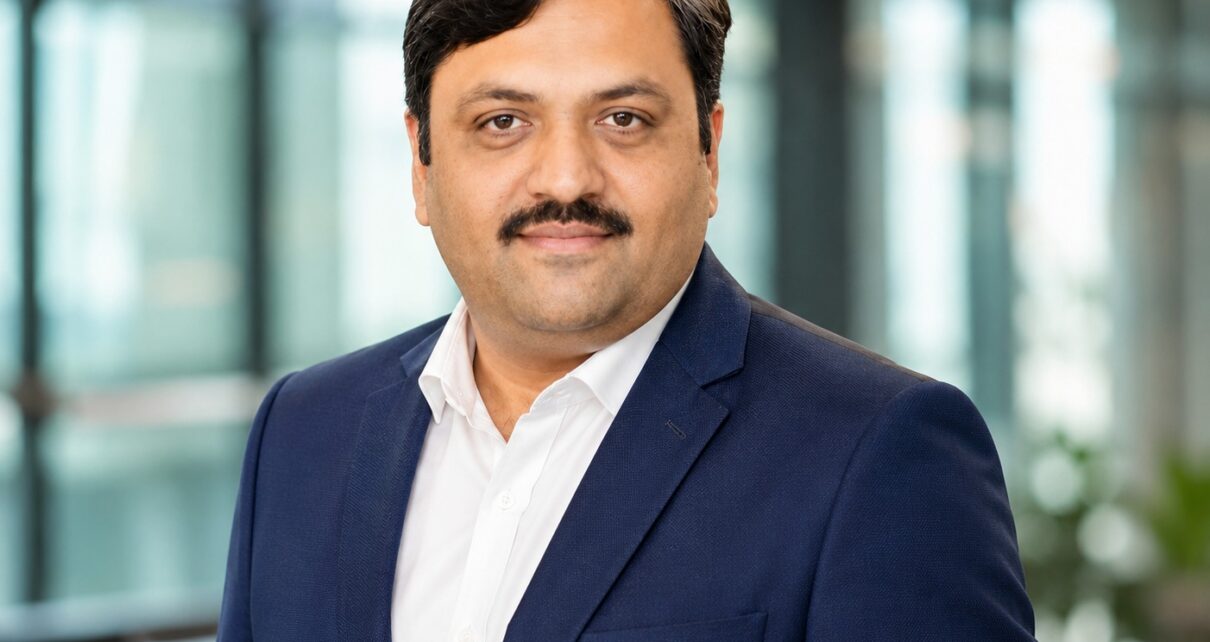
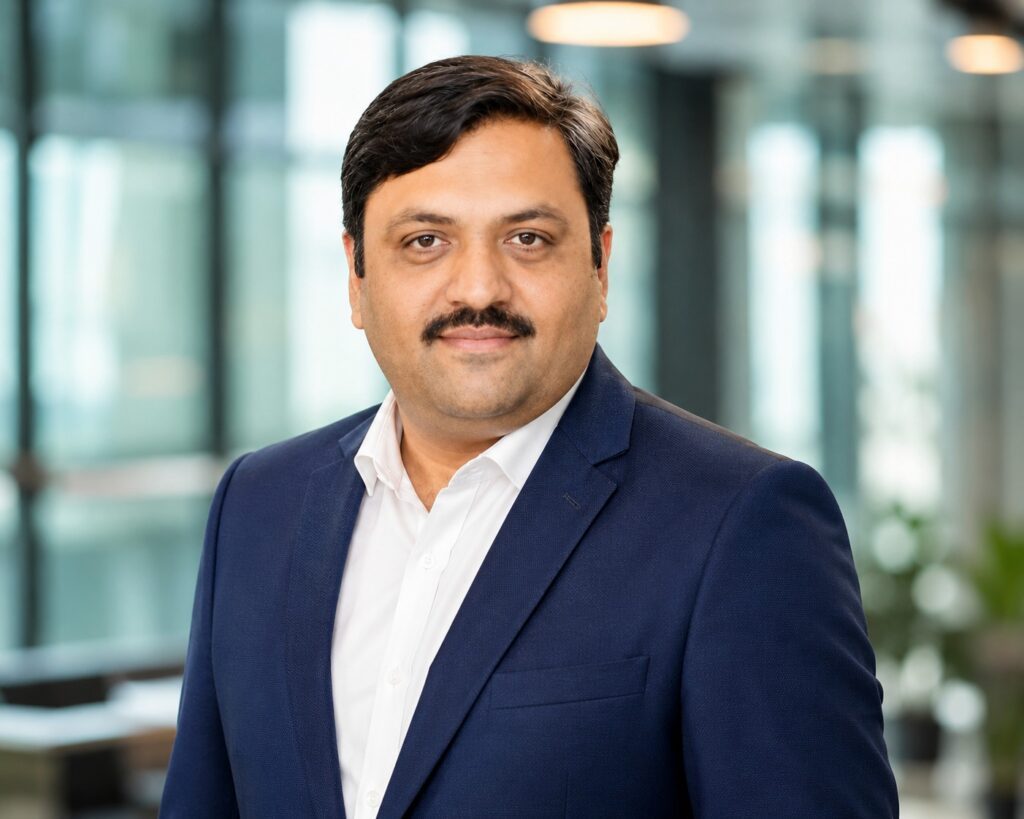
Every meaningful journey begins with a strong belief, and the journey of Prof. Nimish Vasoya is a beautiful reflection of that. At the age of 44, based in Gandhinagar, Gujarat, Dr. Nimish H. Vasoya is a professor, researcher, educational innovator, and one of India’s leading voices in the growing field of Toy Science, STEM education, and play-based learning. Popularly recognised as a Toy Scientist and STEM Innovator, he currently serves as Professor and Director of the Centre of Toy Science at Children’s Research University, Gandhinagar, where he is quietly shaping a new era of child-centered learning in India.
Prof. Nimish’s work is built on a simple yet powerful idea. A toy is not merely an object of entertainment. It can be a child’s first laboratory, design studio, and thinking tool. Guided by this belief, he has spent over 17 years reimagining how children experience physics, mathematics, engineering, creativity, and problem-solving. Under his leadership, the Centre of Toy Science has grown into a strong institutional platform that connects play with scientific inquiry, converting abstract classroom concepts into experiences that children can touch, build, test, and improve.
His professional journey began with physics. He completed his B.Sc., M.Sc., M.Phil., and Ph.D. in Physics from Saurashtra University, building a strong academic foundation early in his career. In July 2008, he stepped into higher education as an Assistant Professor and Head at an engineering institution, where he taught physics, conducted materials research, and shouldered academic and administrative responsibilities. That period shaped him as a researcher, educator, and institutional leader, giving him the discipline and depth he still carries in his work today.
A major turning point came in February 2020, when he joined Children’s University, now known as Children’s Research University, as an Associate Professor and Director of the School of Indic Studies, along with heading the Department of Balbhavan and Toy Innovation. This transition changed the entire direction of his work. He observed that many children were experiencing science as mere definitions and examinations, even though the same ideas became natural, joyful, and intuitive when explored through spinning tops, kites, balloons, puzzles, blocks, and handmade models.
This realisation gave birth to his lifelong mission of connecting his training in physics with toys, play, and child development.
From 22 June 2024, he has been serving as Professor and Director of the Centre of Toy Science. Under his leadership, what started as individual initiatives has evolved into a full institutional ecosystem dedicated to toy-based education. The Centre now houses a Toy Innovation Lab, STEM learning activities, a Toy and Game Library, mobile Toy Van outreach, puzzle-based cognitive learning, indigenous toy documentation, teacher training programmes, and dedicated research on toy pedagogy. Each of these initiatives is designed to make science, mathematics, engineering, and creativity truly accessible and joyful for children of every background.
One of the most impactful aspects of Prof. Nimish’s work is his outreach through the Toy Van. This mobile learning initiative has taken playful science and toy-based STEM learning to more than 1,00,000 children, including learners from underserved regions who may not otherwise have access to specialised STEM facilities. Through this outreach, he is quietly breaking the boundaries of classroom learning and bringing meaningful, hands-on scientific experiences directly to children where they are.
His academic contributions are equally impressive. With more than 17 years in higher education, Prof. Nimish has published over 72 research papers, contributed to conference papers and book chapters, and worked on 18 international patents. His research has evolved from materials science and physics into a broader interdisciplinary programme connecting toys, STEM learning, artificial intelligence, inclusive education, and child-centered innovation.
What makes his work truly special is his commitment to translating research into usable classroom models. He does not leave his ideas only in journals. He works closely with teachers, schools, research scholars, toy makers, and institutional partners to ensure that these ideas reach real students in real classrooms.
Prof. Nimish’s leadership style is deeply human, collaborative, and rooted in service. He believes that a scientist’s real success lies not just in personal achievements, but in the impact created on future generations. This is why he continues to invest his time and expertise in teacher development, indigenous toy documentation, and the creation of new educational books and laboratories. Under his guidance, Toy Science in India is slowly emerging as a coherent field of work that connects research, pedagogy, culture, innovation, and public outreach in one unified vision.
At the core of his mission is a bold and inspiring dream. Prof. Nimish wants to establish a nationally and internationally recognised model where children do not simply memorise science, but truly experience, understand, and love it. He envisions a future where every child in India, regardless of their background, can access joyful, hands-on, and meaningful STEM learning through toys and play. This vision positions him as one of the most important educational innovators of our time, quietly building a movement that could shape how future generations learn science across India and the world.
Today, Prof. Nimish Vasoya stands as an inspiring Toy Scientist, STEM Innovator, and educational leader, whose work is redefining what learning can look like for the next generation. From his early days as a physics researcher to becoming a national voice in toy-based, play-based STEM learning, his journey beautifully reflects how passion, research, and purpose can come together to serve society. Through the Centre of Toy Science at Children’s Research University, he is proving that when curiosity is placed in a child’s hand, the world quietly gains a future thinker, creator, and innovator.