Published on: September 25, 2026
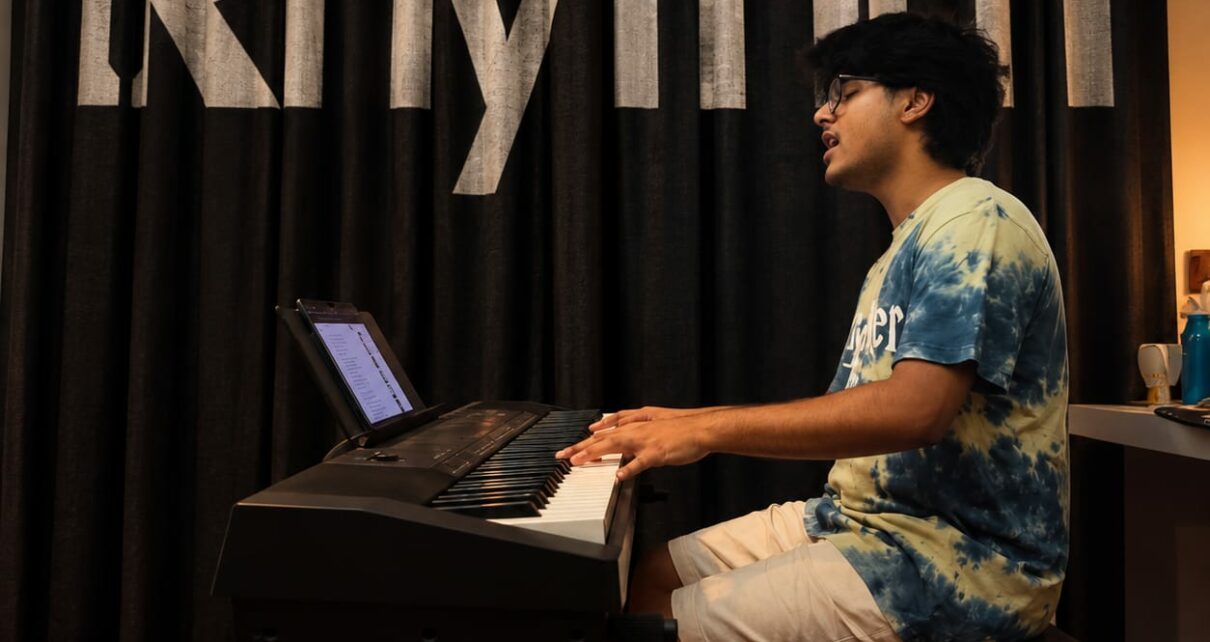
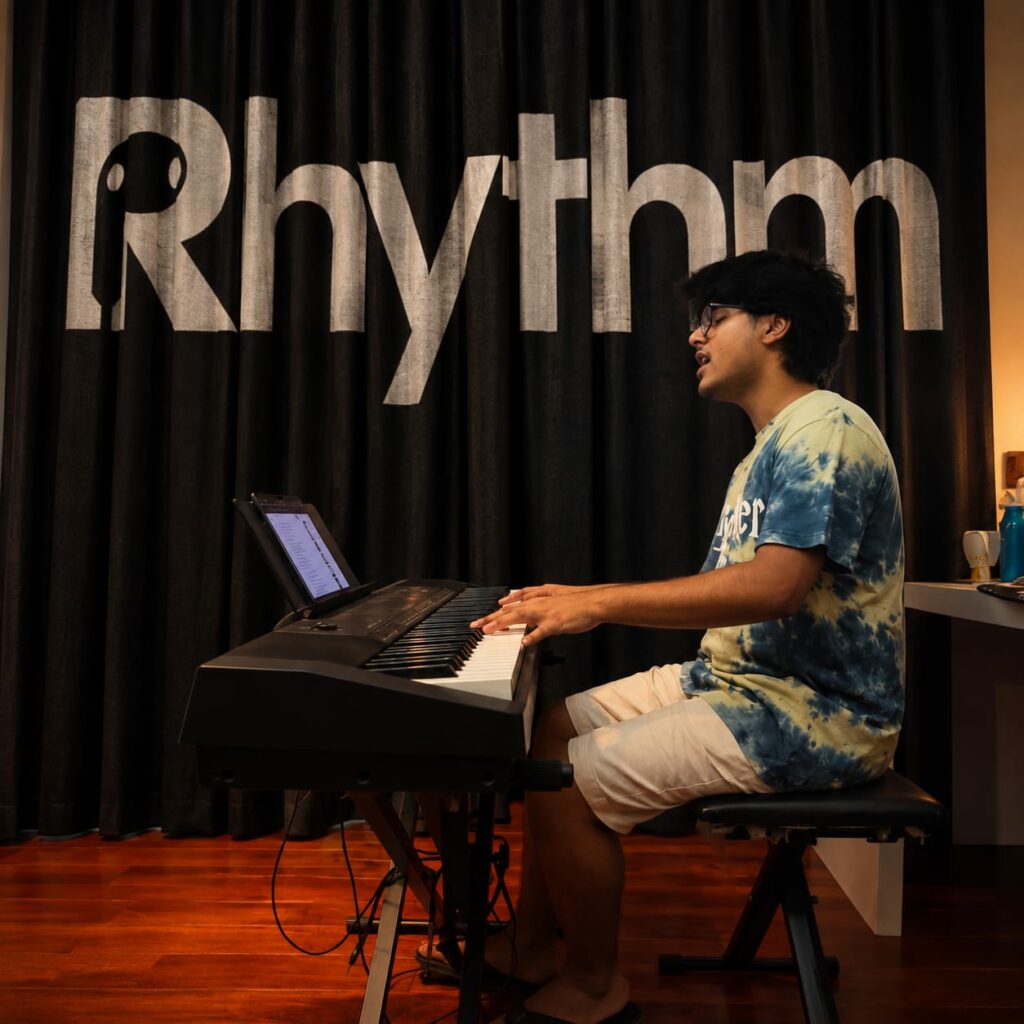
Gurugram, September 2026: In 2019, Krish Ruparel wanted to put a song on Spotify.
There was just one problem. He had almost no money, no professional studio and certainly no record label behind him.
Krish connected his instrument to a Dell all-in-one computer with 2 GB of RAM and opened the trial version of FL Studio. He recorded his rendition of Nino Rota’s Godfather Theme at home.
The trial version would not let him save the project, so he kept FL Studio running. Closing it meant risking the recording he had just created.
Eventually, using RouteNote, the music made it onto streaming platforms. The release itself can still be found publicly today: Godfather Theme by Krish Ruparel and PlayKar Records is dated February 7, 2019 on Apple Music and Amazon Music.
Streams arrived, but the earnings Krish remembers seeing were measured in pennies.
It was not much of an income, but it left him with a lasting lesson: getting music onto a streaming service and building a career around music were two very different things.
Seven years later, the 21-year-old musician and entrepreneur is trying to build the infrastructure he wishes he had on the other side of that computer.
It is called RHYTHM.
More Than a Delivery Button
RHYTHM, short for Ruparel’s House of Young Talent and Harmonious Music, is an India-focused music company and artist operating platform. Its public website describes a connected model spanning artist development, distribution, publishing, marketing, management and label services.
The platform’s published workflow connects applications and human review with onboarding, KYC, release preparation, rights and collaborator information, quality control, managed distribution, royalty reporting, statements, balances, payouts, analytics and support.
But for Krish, there is one distinction that matters more than the rest.
He does not want RHYTHM to become another website where an artist uploads a WAV file, pays a fee and disappears into a catalogue.
For him, the technology is infrastructure. The relationship is the product.
“Everyone has my email and number,” Krish says. “I like to be directly involved with as much as possible.”
That philosophy comes partly from what happened between his first release and RHYTHM.
Krish’s earlier venture, PlayKar Records, has a public catalogue that includes releases by Krish and other artists including Abhinav Sangwan. PlayKar’s public catalogue still traces that history, including Krish’s 2019 release and subsequent releases involving artists such as Abhinav Sangwan.
The songs reached stores, yet something continued to bother him.
“We were the creators, but when the music went to the stores, it never completely felt like it was ours,” he says. “There was a huge communication gap.”
The idea evolved while Krish was studying at NIFT and spending his free time after college building K.R.E.S.T and thinking about what the next version of his music business should look like.
Instead of building another upload portal, he began imagining a music business in which an artist’s distribution, rights, money, services and communication could remain connected.
RHYTHM emerged from that idea.
The Problem Is Not Just Distribution
For independent musicians, releasing a song can begin accumulating costs long before the song earns its first rupee. Recording, production, composition, artwork, mastering, promotion and video can all become separate expenses.
Krish believes pricing, promotion and fragmented support are among the problems RHYTHM needs to address.
His answer is not to promise that RHYTHM can manufacture a hit. RHYTHM’s public workflow explicitly states that it does not fabricate audience metrics.
Instead, the proposition is that an artist should be able to understand what is happening to a release, what has been agreed, what has been reported and what happens next.
Technology handles structure and validation. People still review, communicate and make decisions.
And Not Everyone Gets In
That human involvement also means RHYTHM is willing to reject business.
Asked what happens if an artist is prepared to pay substantially more but the team does not believe in the music, Krish’s response is immediate.
“Quality. If you’re not good, it doesn’t matter if you’re willing to pay me lakhs. We will not touch your work.”
Krish says he is looking primarily for potential and quality rather than simply an existing follower count.
That approach is harder to scale than accepting every upload automatically, but it is consistent with RHYTHM’s published operating philosophy: technology organises the operation while people retain judgement.
What Happens After the Stream?
The less glamorous side of RHYTHM may ultimately be one of its more important parts: accounting.
RHYTHM’s published lifecycle states that supplier reports feed controlled imports, matching, royalty ledgers, statements, analytics, artist balances and payout requests.
Its public documentation also says artists review the applicable economic split schedule, visible beneficiaries, calculation basis, effective date and linked legal version before allocation.
The company cannot control when every streaming service or supplier reports revenue, nor can it promise that every release will succeed. What the system is designed to control is the record around what was reported, allocated and paid.
For Krish, transparency after a release matters as much as getting the release live in the first place.
Distribution Is Only One Piece
RHYTHM’s ambition extends beyond audio distribution.
Its current public services include publishing, Content ID, mastering, VEVO channel setup, video distribution, marketing, artist management and music-business consulting.
Krish says the longer-term ambition extends further into sync licensing, live opportunities, merchandise, brand partnerships, films and podcasts.
His description is simpler: “RHYTHM is AIO. All in one.”
The ambition is to create a company that can remain useful after a song has already appeared on Spotify.
That distinction matters because distribution is one moment. An artist’s career is continuous.
The First Proper Test: Mulakaatein
One of the first releases intended to demonstrate this rebuilt approach is Mulakaatein by singer Mohan Chaudhary.
For RHYTHM, the release is more significant than another catalogue entry.
It is among the first releases being handled through the company’s newer approach, with release preparation, promotional planning and artist development surrounding the distribution itself.
Krish says RHYTHM is also exploring a longer-term relationship with Chaudhary rather than treating the release as a one-time transaction.
It is a small test of a much larger thesis: that an independent artist may need a company around the release, not simply a company that delivers the release.
“Get It Out There”
For all the infrastructure, contracts and dashboards being built around RHYTHM, Krish’s advice to a young musician remains surprisingly short.
Q: What would you tell an 18-year-old sitting somewhere in India with one good song on a laptop, but no idea what to do with it?
“Get it out there.”
There is no elaborate speech attached to the answer. It mirrors how his own journey started: not with a label contract or an expensive studio, but with whatever equipment was available and a determination to make the recording exist.
Q: Why build another music company?
“Because there was always a communication gap. I want this to be personal. Everyone has my email and number. I want to be directly involved as much as possible.”
Q: What matters more when you evaluate an artist: numbers or music?
“Potential and quality.”
Q: Would you work with someone whose music you don’t believe in if the money was good enough?
“No. If you’re not good, it doesn’t matter if you’re willing to pay me lakhs. We will not touch your work.”
Q: Can RHYTHM guarantee streams?
“No. I will make every effort I can to make a release work, but I do not want to sell fake promises, guaranteed virality or manufactured numbers.”
Q: What does success eventually look like?
For Krish, the ambition is much larger than distribution. He wants RHYTHM to grow into a substantial Indian artist ecosystem spanning brand partnerships, live shows, films, podcasts, merchandise and other parts of the music business. India comes first; international expansion can come later.
Why “House” Matters
Krish says the full name, Ruparel’s House of Young Talent and Harmonious Music, is also a tribute to his late grandfather, Manubhai Karsandas Ruparel.
The word “House” was deliberate. He wanted a word that suggested an enclosed, safe place regardless of who entered it.
That idea sits comfortably beside a platform filled with contracts, metadata, royalty ledgers and release statuses because Krish is not trying to remove people from the music business with software. He is trying to use software to make the human work clearer.
A Young Founder Building Against the Default
RHYTHM is still young. Its model depends partly on external music-industry suppliers and reporting cycles. Human review is slower and more operationally demanding than accepting every upload automatically. No platform can know in advance which song audiences will embrace.
But the public product already makes its thesis clear: music needs more than a delivery button.
Krish is attempting to build the kind of music company he says he could not access when he first started.
The one watching fractions of revenue arrive.
The one trying to understand who to contact.
The one wondering what came after distribution.
RHYTHM is his answer.
Perhaps the clearest way to understand the company is to return to that Dell computer in 2019.
A young musician with almost no budget found a way to record the music anyway.
He found a way to distribute it anyway.
And when the system around that music did not look the way he thought it should, he eventually decided to build his own.
About RHYTHM
RHYTHM, Ruparel’s House of Young Talent and Harmonious Music, is an India-focused music company and artist operating platform founded by Krish Ruparel. Its public platform connects artist development, distribution, publishing, marketing, management and label services with release operations, rights, royalties, statements, payouts, analytics and support.
RHYTHM operates under K.R.E.S.T Consulting (OPC) Private Limited.
Official website: feeltherhythm.in